

I’ve been studying how computers talk to one another, in particular when they are not all connected to one big main computer. It so happens that there’s this whole thing called peer-to-peer, or P2P for short. It’s basically a method that allows devices to share things directly, without the need for any kind of central hub. So I’m going to explain what a p2p definition actually means and how it works.
Key Takeaways
- In a peer-to-peer (P2P) arrangement there are no servers, but devices connect and share directly with each other, being both users and providers.
- Unlike conventional setups, P2P networks don’t have a server located at the center of everything.
- Direct link also makes it possible to share resources such as files, bandwidth and CPU power effectively.
- Peer-to-peer tech has been applied in myriad areas — from file sharing and online gaming to communication apps, even blockchain.
- Although P2P has potential merits including economy, efficiency, and fault tolerance, it may also give rise to new security and dependability issues.
P2P Definition – What Does Peer-to-Peer Really Mean?

So just what is this “peer-to-peer” thing, which you often see referred to as P2P? At its essence, it’s a method for computers or devices to speak directly to one another without having to rely on a central boss, like a home server, to oversee everyone and everything. Think of it as friends pooling notes for a class, instead of each one having to ask the teacher for a copy. Every friend (or “peer”) has part of it, and can share it with others.
This idea isn’t exactly new. It really exploded in the late 90s with things like Napster, where people could share music files peer to peer. But it’s since exploded far beyond file sharing. P2P, now the backbone of everything from some online marketplaces to the technology behind cryptocurrencies.
Here is what sets P2P apart explained:
- Direct Connection: Peers don’t send data through a NaMed “center” point instead they connect directly to each other. That means that your device can talk to many other devices at the same time.
- Shared Roles: In P2P, every machine treats the each other the same way. Depending on what’s necessary, a device can be a supplier of information (like a server) or a requester for that information (as a client).
- No Single Point of Failure: No central server means no network wide failure if one computer is disabled. Well, it continues to run so long as there’s a fair number of peers connected and sharing.
In simple terms, P2P is about decentralization – distributing things so that not one body dominates. It’s a different way of thinking about how we share and access stuff on and off the web.
How Peer-to-Peer (P2P) Networks Work

So, anyway does this whole peer-to-peer thing work, exactly? Once you break it down, it’s rather simple. The difference between that and a P2P network is that instead of one big computer in the center doing all the work (like a server), computers in a P2P system spread things out. Each computer, or ’peer’, that is connected to the network can serve as both client and server. It’s a little like how friends pass around books instead of each person venturing out to the library.
When I want to download a file, like a song or a document, over the P2P network, that file doesn’t come from only one location. Here’s a loose sense of what happens:
- Finding the Pieces: In order for my computer (client) to find other computers (peers) that has the file I want. This is a little different depending on what kind of P2P network we’re dealing with, but in essence my computer goes around asking.
- Downloading in Chunks: After I discover the peers, my computer starts downloading the file. But it doesn’t download all its content at once from a single peer. Instead, it dissects the file into small chunks and gets pieces of these chunks from different peers at the same time. This is a significant part of why P2P can be extremely fast for large files.
- Uploading Too: Meanwhile, if other peers are seeking files I possess, my computer can also serve as a server and send those pieces to them. So, I’m both learning and transmitting information.’
It is still possible that the required portions of the file can be provided by other peers. It is this capability for all members to contribute and take (or give) that makes P2P networks so adaptable and, often enough, very robust.
Types of P2P Networks

So, not all P2P networks are created equal. I’ve discovered there are a few top-level categories, and understanding them goes a long way to explaining why some P2P stuff works better than others.
Unstructured P2P Networks
Consider these the wild west example(s) of P2P. When a new computer, or ‘node’, enters the network, it simply connects to all the other nodes they can find. There’s no plan or organization to who connects with whom. It’s relatively easy to stand up, and it can manage a lot of nodes popping in and out of existence, which is pretty typical. The downside? Stuff can be hard to find.
Because I ask for files, and in order to find those files my request might get blasted out to everyone or passed around like a hot potato. It consumes quite a lot of network power, and sometimes, I just cannot find what I want especially if it is not super common.
Structured P2P Networks
Unstructured these things ain’t. They’re way more organized. Now think of a system where every individual node knows exactly where to go find any piece of information.
They are more complicated to set up but the reward is that searching for files or data becomes much more efficient. It’s like having a super-organized library and knowing right where to pull from. This means that even rare items are more findable.
Hybrid P2P Networks
These are kind of a mix. They sort of combine the concept of P2P with more traditional client-server arrangement. There is usually a central server, but instead of storing all the data, it primarily keeps track of who has what. So the way DHT works is that I ask the central server (who knows everything) something and he tells me, well these are the peers that have a file.
It’s sort of like having a directory service that helps put people in touch without doing all the heavy lifting itself. 2 This method can achieve a good trade-off between P2P efficiency and administration of centre-side.
P2P Definition in Different Industries
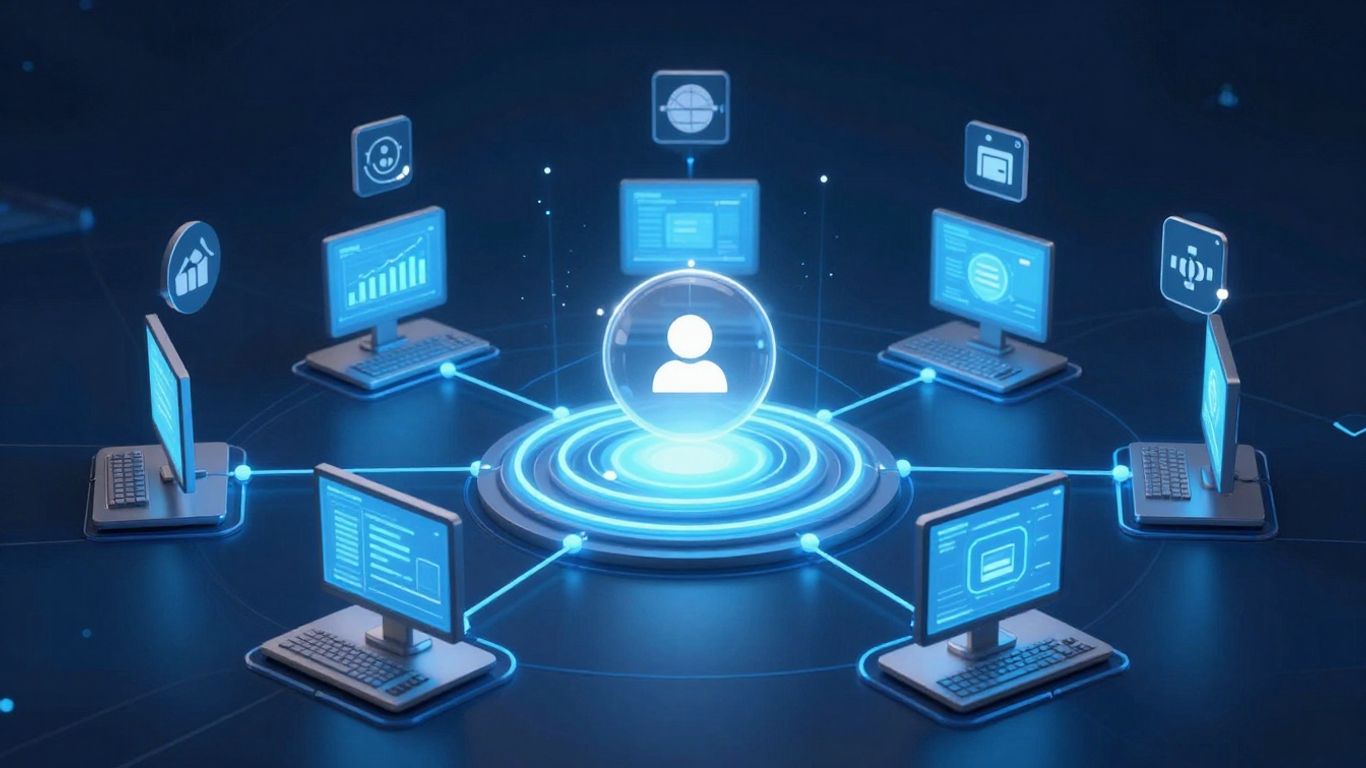
When I first began exploring peer-to-peer, it was mainly in the context of file sharing, so like downloading music or movies back in the day. But as it turns out, P2P is so much more than a way to share files over the internet. It’s been popping up in all kinds of places, transforming how things work.
Think about the sharing economy. Ride-sharing services, short-term rental companies and the like bring people directly into contact and in many cases bypass traditional intermediaries.
I can find a ride to the airport or lodging without needing an entire giant company in between. It’s kind of magic how that works.
And then there’s the whole realm of finance. Cryptocurrencies such as bitcoin also make use of P2P networks. That’s because transactions take place directly between users, not with a bank overseeing everything. It’s a massive shift from the way we’ve typically banked in the past, and it continues to evolve.
We have P2P also in software development. Open source projects are a good example. Developers from anywhere can participate, contributing code and working together on a project.
It’s cooperative, in otherwords — everybody plays a roll; no one company owns it all. This is the kind of openness that makes us powerful.
And that does not apply solely to digital things. In business, the Purchase-to-Pay (P2P) process can also perhaps apply P2P guiding principles in order to simplify or shorten how companies purchase goods and services so that it is more direct from buyers to sellers, or at least eliminating a few steps in the middle.
Indeed, whenever you observe direct relationships between individuals or entities where traditional gatekeepers have been bypassed, chances are you’re looking at P2P in action. It’s a versatile concept that keeps popping up in fresh forms.
Pros and Cons of P2P Networks
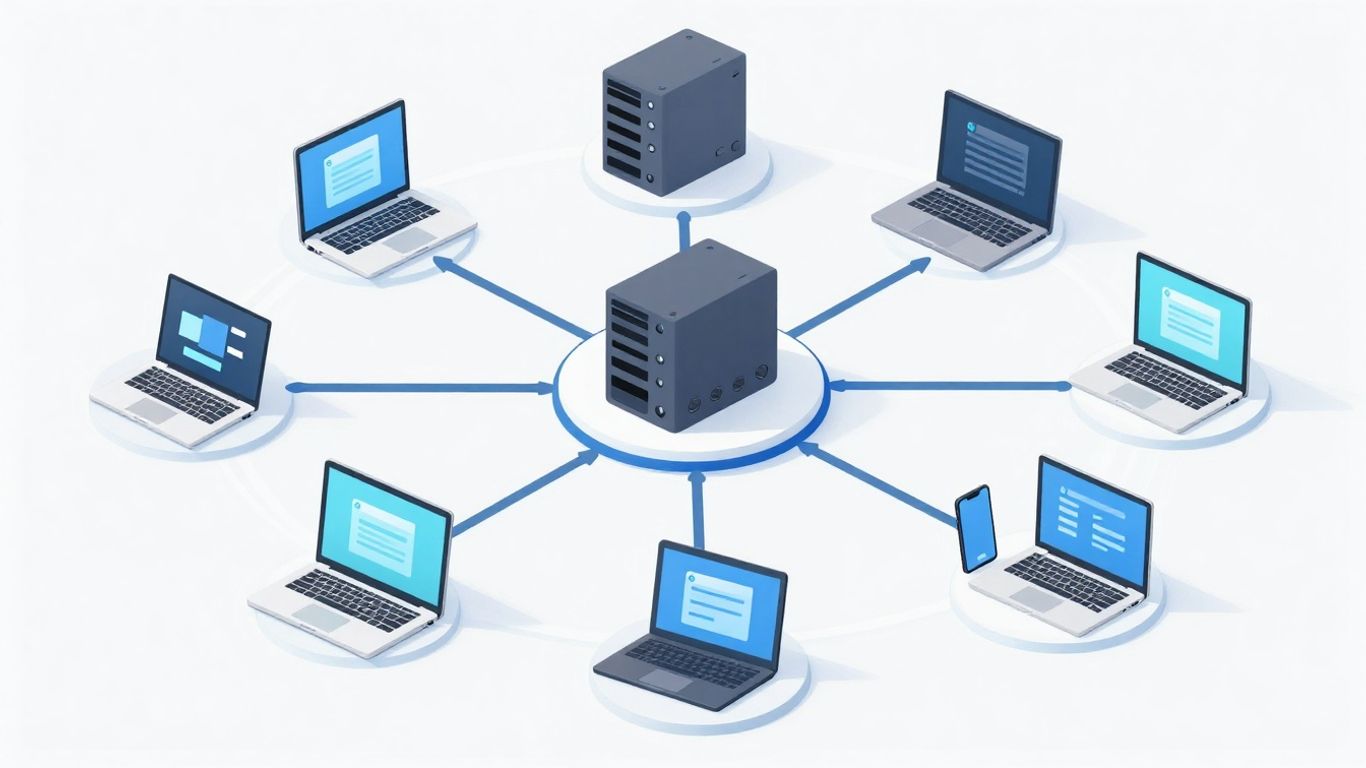
Thus, I’ve been exploring peer-to-peer (P2P) networks for a while now and they seem to be pretty sweet in general but certainly have their trade-offs. It can’t all be sunshine and rainbows.
There’s that upside, I have to say I’m impressed by how P2P networks do just keep on growing. And when a computer is added to the network, it doesn’t merely contribute to demand; it also contributes to supply. It makes them super adaptable and scalable, which is a big deal relative to the old way of doing things.
If one computer crashes or is hacked, the data can generally be retrieved from somewhere else. It also means content may stick around longer: It’s tough to get rid of something that’s splashed across all the corners of the internet. And what’s more: Sometimes it is even faster! When you’re downloading a large file, it can be split into parts, and you can then snatch those parts from more than one computer at the same time.
Which can be a huge savings in download times. Oh, and don’t overlook the savings. You no longer need expensive behemoth central servers, allowing you to save a fortune.
If you’re not careful, other people on the network can stretch this packet of information as it travels from your computer to fall out the other side of a receiver; and even your internet provider might slow you down if they think you’re up to no good. You can use a VPN to get around this, however.
Another issue is finding stuff. While the most common files are easy to locate, niche or less popular content can be a real pain to discover. If the last user who has that file in his or her directory leaves the network, poof, it’s gone. And then there are the legal gray areas.
Is P2P Legal and Safe?

So, you’re probably wondering whether it’s legal, and safe, to use P2P networks. Honestly, it’s something of a mixed bag.
On the legal front, P2P is not illegal. The technology is simply a method to send information directly between computers. The issue arises when people use it to share things for which they don’t control the rights copyrighted movies or music, say. The companies that produce these P2P programs have gotten into trouble over this, and there is case law on the books.
In general, the law appears to indicate that there is nothing wrong with the software itself provided, among other things, that those responsible for creating it cannot effectively control what people share. But you can certainly get into trouble if you’re caught sharing copyrighted material. It’s akin to having a hammer in your house the hammer itself isn’t illegal, but breaking a window by using it is.
And for safety, that’s another place where you’ve got to watch it. And because you’re accessing other people’s computers, you may not have a sense for who that person is or what might be on his machine. Here are some of the key things to keep in mind:
- Malware Risk: Files you download may contain viruses or other nasty stuff. P2P tech has become better about security, but it’s still a potential. Always have strong antivirus software on and scan your downloads.
- Privacy Concerns: Depending on the network, your behavior is cyber-spying and may be seen by others. Others use VPNs as a more general privacy measure you can hide your IP address and what you are downloading or uploading.
- Content Authenticity: You may struggle to confirm whether the file is what it pretends, or has been tampered with. This is even more the case for rare files.
To stay on the safe side, I try to limit myself to the most popular P2P networks and only download files from sources I trust. And, of course, only share files that you’re confident are legal and safe for others to possess. It’s a question of just being smart and knowing that there is danger involved.
Pondering whether P2P file sharing is legal or illegal and if it’s safe? That’s a great question, and it’s critically important to understand the risks and rules. We explain the facts so you can make smarter choices. Interested in reading more about staying safe and legal when sharing files? For the complete details, Check on us at our website!
Frequently Asked Questions
What exactly is a peer-to-peer (P2P) network?
Think of a P2P network like a group of friends sharing toys. Instead of one person having all the toys (like a central server), everyone in the group has some toys and can share them directly with others. In a P2P network, each computer, called a ‘peer,’ can act as both a sharer and a receiver of information or resources. It’s like everyone is on equal footing, making the whole system work together without a bossy central computer.
How does P2P file sharing work?
When I want to download a file using P2P, it’s not like getting it from a single website. Instead, the file is broken into tiny pieces. My computer then finds other computers on the network that have those pieces and downloads them from multiple places at once. As I download, I also start sharing the pieces I already have with others who need them. It’s a collaborative effort where everyone helps out.
Are there different kinds of P2P networks?
Yes, there are! Some P2P networks are like a free-for-all where computers connect randomly, which is easy to set up but can make finding things a bit tricky. Others are more organized, like a well-planned library, making it easier to find specific items. Then there are hybrid ones that mix ideas from both, sometimes using a main computer to help manage things while still letting peers connect directly.
Why are P2P services so popular?
I find P2P services popular because they cut out the middleman. This often means lower costs and more direct interaction. Plus, when many people share resources like internet speed, it can actually make things faster for everyone, especially for tasks like sharing large files. It feels more efficient and less controlled by a single company.
Is using P2P networks safe?
I have to be careful when using P2P networks. While the technology itself can be safe, the content I share or download might not be. It’s important to only get files from trusted sources and to make sure my computer has good security software. Sometimes, people share things illegally, and I definitely want to avoid that. So, I always scan downloads and stick to legal file sharing.
Can P2P be used for more than just file sharing?
Absolutely! I’ve seen P2P used in all sorts of cool ways. For example, some video call apps use it to make calls smoother, and in the world of cryptocurrency, P2P networks are super important for keeping track of transactions securely. It’s also used for things like sharing computing power for scientific research or even for simple file sharing within an office.